
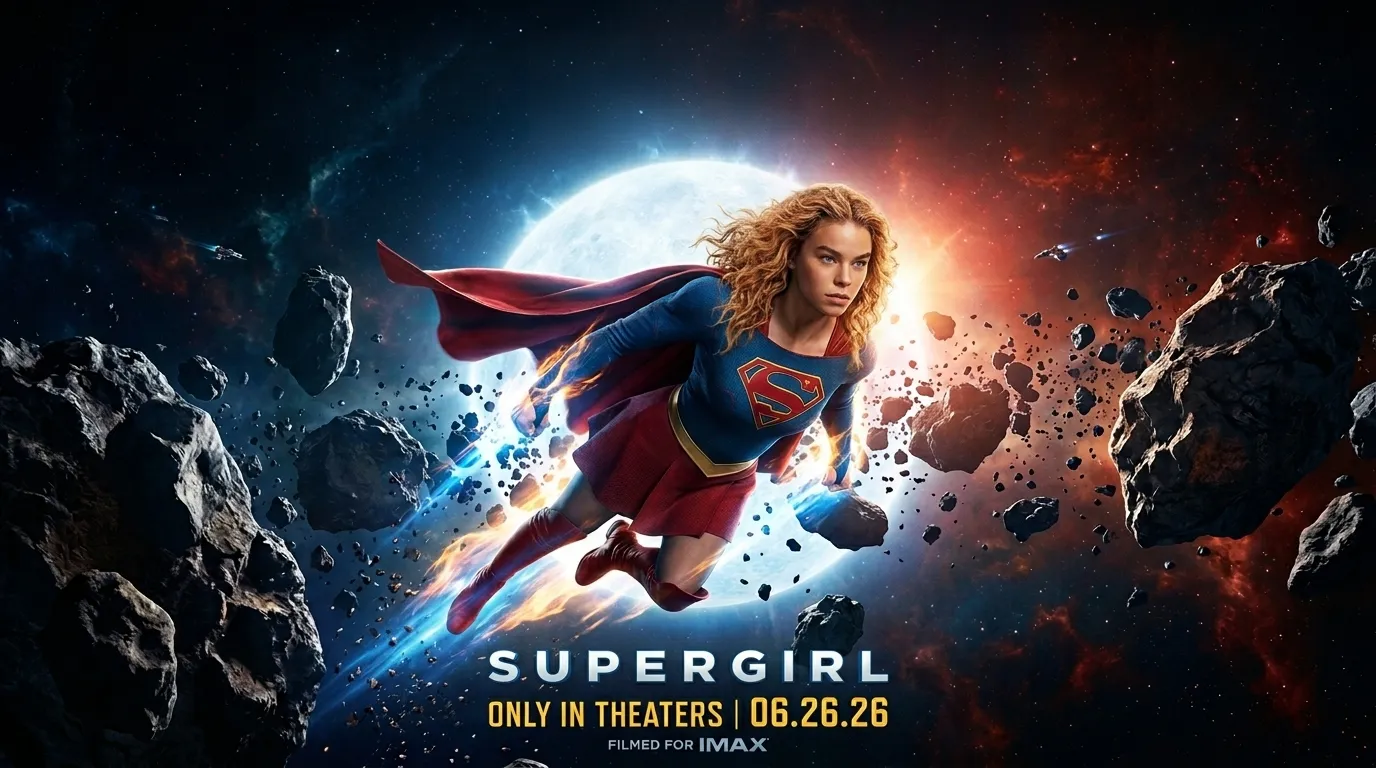
The DC Universe’s bold new chapter has a new hero leading the charge, and her story is darker, stranger, and more emotional than anything Superman gave us last year. Supergirl, directed by Craig Gillespie and starring Milly Alcock, premiered in Brooklyn on June 22, 2026, and arrives in U.S. theaters via Warner Bros. Pictures on June 26, as part of the DCU’s “Chapter One: Gods and Monsters” saga. With a runtime of one hour and forty-seven minutes and a PG-13 rating for strong violence, action, language, and smoking, this isn’t a kid-friendly retread of the Supergirl most audiences remember — it’s a grittier, more grown-up take on the character, and that’s exactly why it deserves your attention.
A Darker Origin Story
Most casual fans know Superman’s story by heart, but Supergirl’s journey has always been different, and this film leans hard into that difference. The story follows Kara Zor-El as she meets young Ruthye Marye Knoll and gets pulled into a tragedy that sends her on a vengeance-driven quest. Unlike her cousin, who was raised by loving parents from infancy, Kara spent her childhood on a fragment of the destroyed planet Krypton, watching the people around her die before she ever reached Earth. That difference in upbringing is the emotional core of the film — this is a Kara who remembers everything she lost, and it shows in how she fights, how she trusts people, and how far she’s willing to go for justice.
The film draws directly from Tom King and Bilquis Evely’s acclaimed 2021–22 comic miniseries, Supergirl: Woman of Tomorrow, which was originally the film’s full title before James Gunn decided to drop the subtitle. Fans of the source material know this comic is considered one of the richest modern portrayals of the character, exploring her grief, her flaws, and her complicated relationship with the impossibly high standard set by Superman. If the movie captures even half of that depth, it’s going to hit very differently than your average superhero blockbuster.
A Cast Built to Surprise You
The casting here is part of the story in itself. Milly Alcock — known to many for playing young Rhaenyra Targaryen in House of the Dragon — takes the lead role, and according to early reports, James Gunn has called her casting the best of his entire career, praising her performance as stunning. She’s joined by Matthias Schoenaerts as the villain Krem of the Yellow Hills, Eve Ridley as Ruthye Marye Knoll, David Krumholtz and Emily Beecham as Kara’s parents, and David Corenswet returning as Superman.
But the real headline-grabber is Jason Momoa. After playing Aquaman for nearly a decade in the DCEU, Momoa shows up here as the bounty hunter Lobo, marking his return to the DC universe in a brand-new role. Interestingly, some critics have speculated that Gunn deliberately spotlighted Lobo in the marketing as a bit of misdirection, suggesting Momoa’s role may actually be smaller than trailers imply — possibly testing audience appetite for more Lobo down the line. Either way, watching one of DC’s most chaotic anti-heroes brought to life on screen for the first time is reason enough to grab a ticket.
There’s also a sweet emotional hook for anyone who watched last year’s Superman: Krypto the flying dog — arguably the breakout star of that film — is back, and his peril seems to be the inciting event that kicks off Kara’s entire mission. If you fell in love with that dog, this movie gives you a reason to fly straight back into theaters.
Why This Matters for the Bigger DCU
This isn’t just another standalone superhero movie — it’s a structural pillar of James Gunn and Peter Safran’s rebuilt DC Universe. Supergirl is the second film in the new DC Universe and the fourth installment of “Chapter One: Gods and Monsters,” meaning the choices made here will ripple into future DC projects for years. Safran has already confirmed that this isn’t a one-off: Alcock’s Supergirl is expected to play a major role in the DCU’s future, including a return in the upcoming Superman sequel, Man of Tomorrow, in 2027. Watching this film now means you’re not catching up later — you’re in on the ground floor of a character who’s about to become central to the franchise.
It’s also a genuine tonal experiment for DC Studios. Gunn has described Kara as “much more hardcore” than the Supergirl audiences are used to — someone shaped by trauma rather than safety, and far removed from the sunny, optimistic tone of Superman. For viewers who want their superhero movies to take real emotional risks instead of playing it safe, that alone makes Supergirl worth seeking out.
The Numbers and the Buzz
The film has already earned two award nominations ahead of release, and reports suggest it carries a substantial production budget in the $170–175 million range — a clear sign of how much confidence Warner Bros. and DC Studios have placed in this story. Test screenings reportedly drew strong praise for Alcock’s performance, along with stylistic touches like era-appropriate needle-drop music choices reminiscent of Gunn’s Guardians of the Galaxy films, even as some reactions to the action sequences and the villain were more mixed — the kind of pre-release chatter that tends to fuel curiosity rather than dampen it.
Bottom Line
If you’ve been waiting for a superhero movie that doesn’t just rehash the “chosen one saves the world” formula, Supergirl offers something more personal: a story about grief, identity, and what it means to seek justice when you’ve lost almost everything. With a star-making performance from Milly Alcock, a scene-stealing new role for Jason Momoa, the emotional pull of Krypto’s return, and a script rooted in one of the best modern Supergirl comics ever written, this is a film built to surprise even longtime DC fans.
It hits theaters on June 26, 2026 — and given its place at the foundation of the new DCU, this is one origin story worth experiencing on the big screen.